
Cloud PBX: What It Is, How It Works, and Why Your Business Needs It in 2026

Discover how cloud PBX transforms business communication with lower costs, remote flexibility, and enterprise-grade features. Learn everything you need to make the switch.
The way businesses communicate is changing fast. Traditional phone systems — the ones that rely on bulky hardware stacked in a back room — are being replaced by a smarter, leaner alternative: the cloud PBX. If you have ever wondered what a cloud PBX actually is, how it compares to a traditional phone setup, or whether it is the right fit for your company, this guide breaks it all down.
Whether you run a five-person startup or a multi-location enterprise, understanding cloud PBX technology can save you money, simplify operations, and give your team the flexibility to work from anywhere.
What Is a Cloud PBX?
A cloud PBX (Private Branch Exchange) is an internet-based phone system that routes and manages business calls through a provider's secure servers rather than through physical equipment in your office. Instead of copper wires and on-site switchboards, your calls travel over the internet using VoIP (Voice over Internet Protocol) technology.
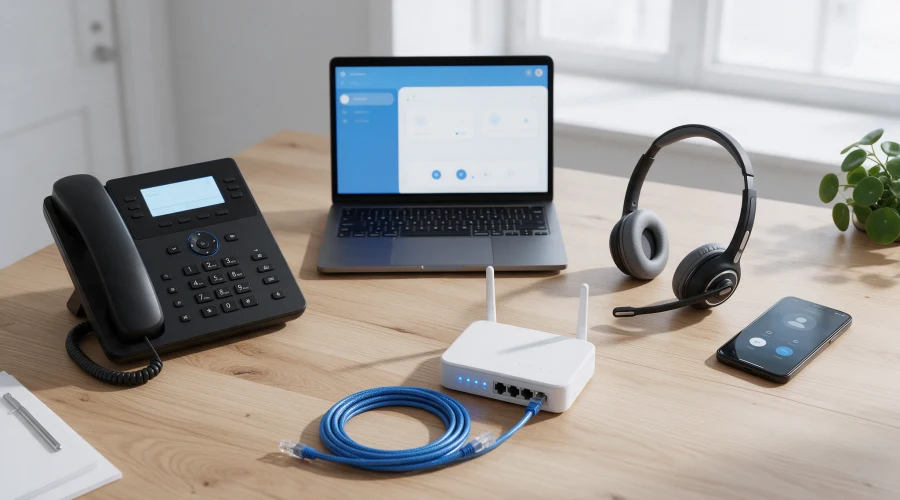
You may also hear it called a hosted PBX or cloud based PBX — these terms all refer to the same concept: your phone system lives in the cloud, managed by a third-party provider, so your team can make and receive calls from desk phones, laptops, or mobile apps without maintaining any on-site hardware.
How Does a Cloud PBX Phone System Work?
The mechanics behind a cloud PBX are surprisingly straightforward. Here is a simplified overview of the process:
- Device registration: Employees connect their devices — desk phones, softphones, or smartphone apps — to the cloud PBX platform over a secure internet connection.
- Call routing in the cloud: When someone dials a number or internal extension, the cloud PBX decides how to route the call, which rules to apply, which ring groups or queues to use, and what happens if nobody answers.
- Connection to the public network: The provider connects your system to the Public Switched Telephone Network (PSTN), enabling calls to and from standard phone numbers worldwide.
- Features run on the platform: Tools like auto attendants, IVR menus, call recording, voicemail-to-email, and CRM integrations all operate in the cloud and apply instantly to every user.
Cloud PBX vs. Traditional PBX: Key Differences
One of the most common questions businesses ask is how a cloud PBX stacks up against a legacy on-premises system. The table below highlights the most important distinctions.
| Feature | Traditional PBX | Cloud PBX |
|---|---|---|
| Hardware | On-site servers and phones | No on-site hardware needed |
| Upfront Cost | High (equipment + installation) | Low (subscription-based) |
| Scalability | Requires physical changes | Add or remove users instantly |
| Remote Access | Limited | Full access from any device |
| Maintenance | In-house IT team required | Managed by the provider |
| Uptime | Depends on local infrastructure | 99.99%+ with redundant data centers |
| Integrations | Limited third-party support | CRM, helpdesk, and more |
Top Benefits of Switching to a Cloud PBX
1. Significant Cost Savings
Without expensive hardware to buy, install, and maintain, a cloud PBX dramatically reduces your telecom budget. Most providers use a per-user, per-month pricing model, making costs predictable and easy to manage. Research consistently shows that a majority of businesses see notable reductions in communication expenses after moving to the cloud.
2. Flexibility for Remote and Hybrid Teams
A cloud PBX phone system lets employees make and receive business calls from anywhere with an internet connection — whether they are at the office, working from home, or traveling. Softphone apps, web clients, and mobile apps keep your team connected without being tied to a physical desk.
3. Effortless Scalability
Need to onboard 20 new agents for a seasonal campaign? With a cloud based PBX, you simply add users through a web dashboard — no technician visit, no new hardware. When demand drops, you scale back just as easily. This agility is especially valuable for growing businesses and those with fluctuating call volumes.
4. Enterprise-Grade Features Without Enterprise Budgets
Cloud PBX platforms pack in features that used to be reserved for large corporations: interactive voice response (IVR), intelligent call routing, call recording, analytics dashboards, voicemail-to-email, and ring groups. Smaller teams gain access to the same professional tools at a fraction of the cost.
5. Seamless Integrations
Modern cloud PBX solutions integrate with CRM platforms, helpdesk software, productivity suites like Microsoft 365, and other business tools. This means your team can log calls automatically, trigger workflows, and keep customer records up to date without switching between applications.
6. Business Continuity and Reliability
Reputable cloud PBX providers maintain multiple data centers in different geographic locations, delivering uptimes of 99.99% or higher. If one server encounters an issue, traffic is rerouted automatically — meaning your phones stay online even when localized outages occur.
What to Look for in a Cloud PBX Provider
Not every cloud PBX service is created equal. When evaluating providers, keep these criteria in mind:
- Call quality and reliability: Look for HD voice, low latency, and guaranteed uptime backed by service level agreements (SLAs).
- Feature set: Ensure the platform includes the tools your team actually needs — IVR, call routing, voicemail-to-email, recording, and real-time analytics.
- Integrations: Check compatibility with your CRM, helpdesk, and other daily tools.
- Security: Enterprise-grade encryption, regular updates, and compliance certifications are non-negotiable.
- Scalability and pricing transparency: Avoid hidden fees. Choose a provider with flexible plans that grow with you.
- Support: Responsive, knowledgeable customer support — ideally 24/7 — makes a major difference when issues arise.
Ready to Make the Switch? Start With COPERATO
If you are looking for a cloud PBX provider that combines reliability, competitive pricing, and a full-featured platform, COPERATO's Cloud PBX is worth a close look. With over 15 years of experience in VoIP telecommunications, COPERATO offers a cloud PBX service built around the features modern businesses need: intelligent call routing, customizable IVR, voicemail-to-email, ring groups, call recording, and seamless CRM integrations — all delivered through a secure, scalable platform.
COPERATO's hosted PBX solution is designed to work for businesses of every size, from startups managing their first phone lines to enterprises coordinating multi-location operations. Their competitive call rates, transparent pricing, and dedicated support team mean you get high-quality communications without surprise costs.
Final Thoughts
The shift from traditional phone systems to cloud PBX is not a passing trend — it is a fundamental change in how businesses communicate. Lower costs, greater flexibility, built-in enterprise features, and the freedom to work from anywhere make cloud PBX the clear choice for companies that want to stay competitive and agile.
Whether you are replacing an aging PBX or setting up communications for the first time, a cloud PBX gives you a modern foundation that scales with your business. Ready to take the next step? See how COPERATO's Cloud PBX can work for your business.