
Why a Cloud PBX Phone System Is the Smartest Move Your Business Can Make Right Now

Discover how a cloud PBX phone system can cut costs, boost flexibility, and simplify business communication. Learn what cloud PBX is, why companies are switching, and how to pick the right solution for your team.
Let's be honest — nobody wakes up excited about their office phone system. It's one of those things you don't think about until it stops working, costs too much, or your team starts complaining about dropped calls during an important client meeting.
But here's the thing: the way businesses handle voice communication has changed dramatically over the past few years. The old setup — a closet full of wires, a clunky PBX box, and an IT contractor you call every time something breaks — just doesn't make sense anymore. That's where a cloud PBX phone system comes in, and if you haven't looked into it yet, you're probably spending more than you need to.
What Exactly Is a Cloud PBX Phone System?
PBX stands for Private Branch Exchange. In plain language, it's the technology that manages your internal and external business calls — routing them to the right person, handling voicemail, managing hold queues, and so on.
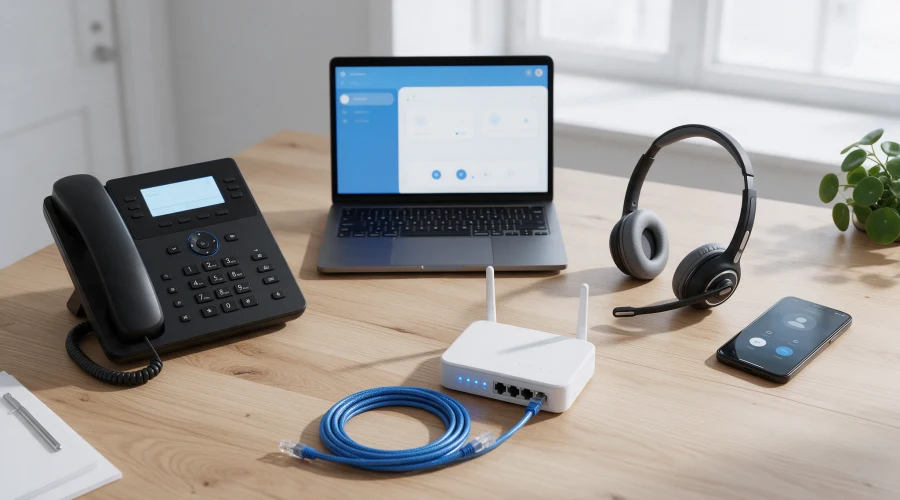
A traditional PBX lives on your premises. You buy the hardware, install it, maintain it, and replace it when it becomes obsolete (which happens more often than vendors will admit). A cloud PBX phone system does all the same things, but the infrastructure lives in secure data centers maintained by your provider. Your team accesses everything through the internet, using desk phones, laptops, or even their smartphones.
Think of it like email. You probably don't run your own email server anymore. You use a cloud-based service that's always available, always updated, and works from any device. A cloud PBX phone system follows the same logic, but for your voice communications.
Why Companies Are Ditching Traditional Phone Systems
The shift to cloud-based phone systems isn't just a tech trend. There are real, tangible reasons businesses of every size are making the switch.
The Cost Difference Is Hard to Ignore
Traditional PBX systems come with a hefty price tag upfront — hardware, installation, wiring, and ongoing maintenance contracts. With a cloud PBX phone system, you're typically looking at a predictable monthly fee per user. No surprise repair bills. No expensive hardware refreshes every few years. Many businesses report saving anywhere from 30 to 60 percent on telecom costs after switching.
Remote and Hybrid Work Just Works
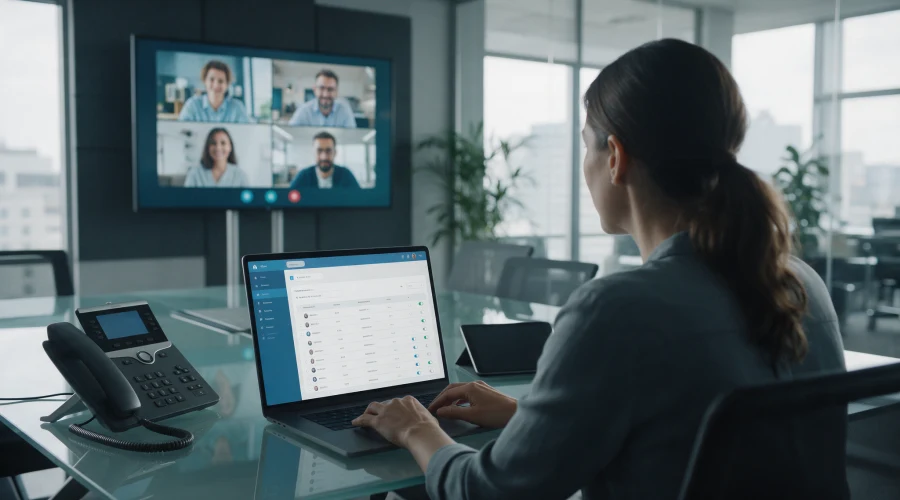
If your team works from different locations — and let's face it, most teams do now — a traditional phone system becomes a headache. You need VPN setups, call forwarding configurations, and workarounds that never quite feel seamless. A cloud PBX phone system doesn't care where your employees are. They pick up their business line from a desk phone in the office, an app on their phone, or a browser on their laptop. Same number, same features, zero friction.
Scaling Without the Stress
Adding a new employee to a traditional system often means calling your vendor, ordering hardware, and waiting. With a cloud PBX, adding a new user takes a few clicks and a couple of minutes. Downsizing works the same way. You pay for what you actually use — nothing more.
Features That Actually Matter
Not every feature on a vendor's checklist will be relevant to your business. Here are the ones that tend to make the biggest real-world difference:
- Auto attendants and IVR menus — let callers route themselves to the right department without a receptionist fielding every single call.
- Call recording and transcription — invaluable for training, compliance, and resolving disputes.
- Voicemail-to-email — a small feature that saves a surprising amount of time.
- Video conferencing and team messaging — many cloud PBX platforms bundle these in, so you can stop paying separately for yet another collaboration tool.
- CRM integrations — connect your phone system to Salesforce, HubSpot, or whatever you use so call data flows directly into your customer records.
- Analytics dashboards — see call volumes, wait times, and performance metrics without digging through spreadsheets.
The key takeaway here is that a modern cloud PBX phone system is not just a phone. It's a communication platform that ties together voice, video, messaging, and your existing business tools.
"But What About Reliability?"
This is probably the most common concern businesses have, and it's a fair one. If your phone system goes down, you lose revenue and credibility. Here's the reality: reputable cloud PBX providers operate from geo-redundant data centers with failover built in. Most guarantee 99.99 percent uptime or higher, which translates to roughly 52 minutes of potential downtime per year — far less than the average on-premise system experiences.
On the security side, enterprise-grade cloud PBX platforms use TLS and SRTP encryption for calls, meaning your conversations are protected in transit. Data is stored in secure facilities with the kind of physical and digital protections most small and mid-size businesses simply can't afford to build themselves.
Is it perfect? Nothing is. But for the vast majority of businesses, a cloud PBX phone system is more reliable and more secure than what they're currently running.
How to Choose the Right Cloud PBX Phone System
Not all cloud PBX providers are created equal. Here are a few things worth looking at before you sign on the dotted line:
- Call quality and uptime guarantees — ask about SLA commitments and what happens if they don't meet them.
- Pricing transparency — watch out for hidden fees on things like international calling, additional lines, or premium features that should probably be standard.
- Integration support — make sure the platform plays well with the tools your team already uses.
- Customer support — 24/7 availability is great, but test it before you commit. Send a pre-sales question and see how long they take to respond.
- Scalability — think about where your business will be in two or three years. The platform should grow with you, not hold you back.
The Real Question Isn't Whether to Switch — It's When
Here's what it comes down to: traditional phone systems are a depreciating asset with rising maintenance costs. Cloud PBX phone systems are a service that improves over time, with new features rolled out automatically, security patches applied without downtime, and pricing that scales with your actual needs.
If you're still running an on-premise system, you're probably paying more than you should for less than you could have. And if you're a newer business setting up your first real phone system, there's almost no scenario where a traditional PBX makes more sense than going straight to the cloud.
The businesses that figure this out sooner tend to move faster, communicate better, and spend less doing it. That's not a sales pitch — that's just how the math works out.
Where to Start
You don't need to overhaul everything overnight. Most cloud PBX providers offer trial periods or phased migrations that let you test the waters before fully committing. Start with a small team, see how it performs, and scale from there.
The point is to stop putting it off. Your competitors are already making the switch, and the longer you wait, the more you're leaving on the table — in terms of both cost savings and operational efficiency.
COPERATO's Cloud PBX phone system is a practical option that fits businesses of all sizes without the inflated costs. It's designed to make the transition easy and deliver the reliability, features, and flexibility modern teams need to communicate effectively.