
Cloud PBX Providers: How to Choose the Right Partner

Selecting a cloud PBX provider is a decision that affects every phone call your business makes for years. This guide helps you evaluate providers systematically to find the right long-term partner.
The market for cloud PBX providers has exploded over the past decade. What was once a niche technology offered by a handful of pioneers is now a crowded marketplace with dozens of providers competing for your business. This abundance of choice is both opportunity and challenge — more options mean better chances of finding a perfect fit, but also more work to separate excellent providers from mediocre ones.
Your phone system touches every customer interaction, every internal collaboration, every sales opportunity. Choosing the wrong provider means years of frustration, while choosing the right one creates a foundation for efficient communication that scales with your business. This guide provides a systematic framework for evaluating cloud PBX providers.
Understanding What Cloud PBX Delivers
Before evaluating providers, ensure you understand what cloud PBX technology actually provides and how it differs from traditional alternatives:
The Core Value Proposition
Cloud PBX moves your phone system from on-premises hardware to internet-based infrastructure managed by your provider. This shift eliminates capital equipment purchases, reduces IT management burden, and enables features that would be prohibitively expensive with traditional systems. Your phones connect over the internet, and the "intelligence" of your phone system lives in the cloud.
Key Capabilities
Modern cloud PBX systems offer extensive feature sets: auto-attendants, call routing, voicemail-to-email, call recording, conferencing, mobile apps, CRM integration, and detailed analytics. These capabilities come standard with most providers, though implementation quality varies significantly.
Deployment Flexibility
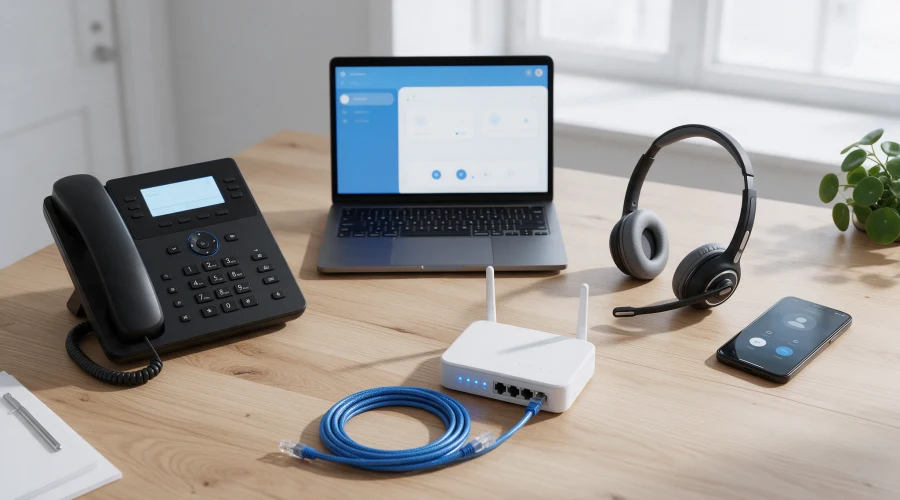
Cloud PBX supports diverse work arrangements. Employees can use desk phones in offices, softphones on computers, or mobile apps on personal devices — all with the same business number and full feature access. This flexibility has become essential as hybrid and remote work models proliferate.
Scalability Benefits
Unlike traditional systems requiring hardware purchases for expansion, cloud PBX scales through subscription adjustments. Adding users takes minutes. Seasonal businesses can scale up for busy periods and back down afterward. Growing companies don't face painful system replacements when they outgrow capacity.
Critical Evaluation Criteria
Not all cloud PBX phone systems are created equal. Focus your evaluation on factors that most impact long-term satisfaction:
Reliability and Uptime
Phone service must work. Period. Evaluate provider infrastructure, redundancy architecture, and uptime track records. Look for geographically distributed data centers with automatic failover. Request historical uptime data, not just SLA promises. A provider claiming 99.99% uptime should be able to prove it with real performance metrics.
Call Quality
Voice quality varies dramatically between providers. Technical factors include codec support (HD voice requires G.722 or Opus), network optimization, and carrier relationships. The only reliable test is actual usage — conduct trials with real users making calls to real destinations during your evaluation.
Feature Completeness
Verify that advertised features actually exist and work as expected. Demo environments often showcase capabilities that perform differently in production. Pay particular attention to features critical to your operations — if you need specific CRM integration, test it thoroughly, don't assume it works.
Administration Simplicity
Someone must manage your phone system day-to-day. Evaluate administrative interfaces for intuitiveness. Can non-technical staff add users, modify call routing, or pull reports without IT involvement? Complex administration creates ongoing friction and dependency on specialized knowledge.
Integration Capabilities
Modern business relies on connected systems. Evaluate native integrations with your CRM, helpdesk, and productivity tools. For unique requirements, assess API capabilities and developer documentation. Providers with robust integration ecosystems deliver more value than those operating in isolation.
Evaluating Provider Reliability
Dig deeper into reliability claims to understand what you're actually buying:
Infrastructure Architecture
Ask about data center locations, redundancy design, and failover procedures. Quality providers operate multiple geographically separated facilities with automatic traffic rerouting when problems occur. Single-location providers present unnecessary risk regardless of individual facility quality.
Carrier Relationships
Cloud PBX providers connect to the traditional phone network through carrier partnerships. Providers with multiple tier-1 carrier relationships can route around problems and optimize call paths. Those dependent on single carriers inherit that carrier's limitations.
SLA Terms
Read service level agreements carefully. What uptime percentage is guaranteed? What happens when guarantees aren't met — meaningful service credits or apologetic emails? Are there exclusions that could void the SLA during exactly the situations where you'd need it?
Historical Performance
Request actual uptime history, not just commitments. Some providers publish status pages showing historical performance. Third-party review sites often include reliability feedback from real customers. Past performance predicts future experience better than marketing promises.
Disaster Recovery
Understand what happens during major outages. How does the provider communicate during incidents? What backup capabilities exist? Can calls be rerouted to mobile phones or alternate systems if cloud services become unavailable?
Assessing Support Quality
Support capabilities become critical when problems occur. Evaluate thoroughly before committing:
Support Channels
What contact methods are available — phone, chat, email, ticket system? Are all channels available on all plans, or are basic plans limited to email-only support? For business-critical phone systems, phone support with reasonable response times matters.
Support Hours
When is support available? 24/7 coverage matters if your business operates outside standard hours or spans multiple time zones. Some providers staff support only during their local business hours, leaving customers without help for evenings, weekends, or holiday emergencies.
Support Quality
Availability means nothing if support is unhelpful. During trials, contact support with realistic questions. Measure response time, assess knowledge level, and evaluate whether they solve problems or just follow scripts. Reviews focused on support experiences provide valuable insight.
Implementation Support
How much help do you get during deployment? Some providers offer dedicated implementation managers and white-glove onboarding. Others provide documentation and expect self-service. Complex deployments benefit significantly from hands-on support.
Escalation Paths
When first-line support can't resolve issues, what happens? Understand escalation procedures, typical resolution times for complex problems, and whether escalation requires additional fees or premium support tiers.
Understanding True Costs
Cloud PBX pricing complexity can obscure actual costs. Look beyond headline numbers:
Per-User Pricing Tiers
Most providers offer multiple pricing tiers with different feature sets. Compare similar tiers across providers — a basic plan lacking essential features forces upgrades that change the cost comparison. Calculate total cost for your specific needs, not generic pricing.
Additional Fees
Look for costs not included in per-user pricing: phone number fees (local, toll-free, international), metered calling charges, premium feature add-ons, storage costs for recordings, API access fees. Request itemized quotes reflecting your actual usage patterns.
Hardware Costs
Will you use desk phones, and if so, what are the costs? Some providers include phones or offer significant discounts. Others sell at full retail prices. Consider whether existing phones are compatible or require replacement.
Implementation Costs
What are one-time setup charges? Are there fees for number porting, custom configuration, or training? Implementation costs can significantly impact first-year total cost of ownership.
Contract Terms
Pricing often varies by commitment length. Monthly contracts maximize flexibility but cost more. Annual commitments reduce per-user costs. Multi-year agreements offer deepest discounts but create lock-in risk. Balance savings against flexibility based on your confidence in the provider.
Security and Compliance Considerations
For many organizations, security and compliance requirements constrain provider selection:
Encryption Standards
Voice traffic should be encrypted in transit using TLS for signaling and SRTP for media. Verify encryption is enabled by default, not an optional configuration. For sensitive industries, evaluate whether end-to-end encryption options exist.
Compliance Certifications
Relevant certifications depend on your industry. Healthcare organizations need HIPAA-compliant providers. Financial services may require specific security certifications. SOC 2 Type II certification indicates robust security practices. GDPR compliance matters for organizations with European operations.
Data Residency
Some organizations require data storage in specific geographic locations. Understand where call recordings, voicemails, and logs are stored. Can data residency requirements be accommodated?
Access Controls
Evaluate administrative security features: role-based access control, multi-factor authentication, audit logging, IP restrictions, single sign-on integration. These capabilities matter both for security and for demonstrating compliance during audits.
Data Retention and Deletion
Understand data retention policies. How long are recordings and logs kept? Can retention be customized? What happens to data when you leave the provider — is it deleted completely, and can you get confirmation?
The Evaluation Process
Structure your evaluation for efficient, fair comparison:
Define Requirements First
Before contacting providers, document what you need. How many users? What features are essential versus nice-to-have? What integrations matter? What's your budget? Clear requirements enable focused evaluation and prevent feature creep from driving up costs.
Create a Shortlist
Research narrows the field to 3-5 candidates worth detailed evaluation. More than five creates evaluation fatigue; fewer than three limits comparison. Use industry reviews, peer recommendations, and initial research to identify likely fits.
Standardize Demonstrations
Give each provider the same demo scenario based on your actual use cases. Standardization enables fair comparison. Let providers showcase strengths, but ensure they address your specific requirements, not just generic capabilities.
Conduct Real Trials
Demos are controlled environments. Trials reveal reality. Run pilots with actual users in actual workflows for at least two weeks. Test during peak usage periods. Make calls to real destinations — mobile phones, international numbers, problematic area codes.
Check References
Ask for customer references — specifically customers similar to you in size, industry, and use case. Generic references provide limited insight. Ask references about reliability, support quality, implementation experience, and whether they'd choose the same provider again.
Involve Stakeholders
Include representatives from groups who'll use the system: IT, reception, sales, support, executives. Different perspectives catch different issues. A system that impresses IT might frustrate daily users.
Red Flags to Watch For
Warning signs that suggest a provider may disappoint:
- Reluctance to provide trials: Quality providers welcome testing because they're confident in their service. Resistance suggests concern about what evaluation might reveal.
- Vague infrastructure answers: Legitimate providers can explain their architecture, redundancy, and carrier relationships clearly. Vagueness often masks inadequate infrastructure.
- Aggressive sales pressure: High-pressure tactics and heavy discounting for immediate decisions suggest the provider expects buyer's remorse. Confident providers don't need pressure.
- Hidden pricing: Providers who won't provide clear, itemized pricing before commitment are likely hiding unfavorable terms.
- Poor demo experience: If demos have problems, production will too. Demo environments should showcase providers at their best.
- Limited references: Inability to provide relevant references suggests lack of successful deployments in your situation.
Questions to Ask Every Provider
Essential questions for your evaluation conversations:
- Infrastructure: How many data centers do you operate? Where are they located? What happens if one fails?
- Reliability: What was your actual uptime last year? Can you provide historical performance data?
- Carriers: Which carriers do you work with? Can you route around carrier problems?
- Support: What are your support hours? What's typical response time? Can I speak with support during this evaluation?
- Implementation: What does implementation include? Who handles what? What's the timeline?
- Pricing: Can you provide itemized pricing for my specific requirements including all fees?
- Contracts: What are the terms? What happens if I need to cancel early?
- Security: What certifications do you hold? Where is data stored? How is it protected?
Making the Final Decision
After thorough evaluation, making the final choice:
Weight Your Criteria
Not all factors matter equally. Reliability typically outweighs minor price differences. Support quality matters more for complex deployments. Rank your criteria and evaluate finalists against your priorities, not generic checklists.
Trust Trial Experience
Real-world trial performance predicts future experience better than demos, marketing, or even references. If a provider performed well during your pilot, that matters more than theoretical concerns. If they struggled, believe what you observed.
Consider the Relationship
You'll work with this provider for years. How do interactions feel? Are they responsive and helpful, or bureaucratic and dismissive? Sales experience often predicts support experience. Choose partners, not just vendors.
Plan the Transition
Understand exactly what implementation involves before signing. Who does what? What's the realistic timeline? What could go wrong? A clear migration plan reduces transition risk and sets expectations appropriately.
Final Thoughts
Selecting cloud PBX providers deserves careful evaluation. The right choice creates a foundation for efficient business communication that serves you for years. The wrong choice means frustration, wasted money, and eventual migration hassle.
Take the time to understand your requirements, evaluate systematically, and test thoroughly. Involve stakeholders, check references, and trust what you observe during trials. The investment in proper evaluation pays dividends throughout your relationship with the chosen provider.
COPERATO welcomes rigorous evaluation because we're confident in what we deliver. Our cloud PBX phone system combines enterprise-grade reliability with intuitive administration, backed by support that actually helps. We invite you to put COPERATO through your evaluation process and see how we compare.